
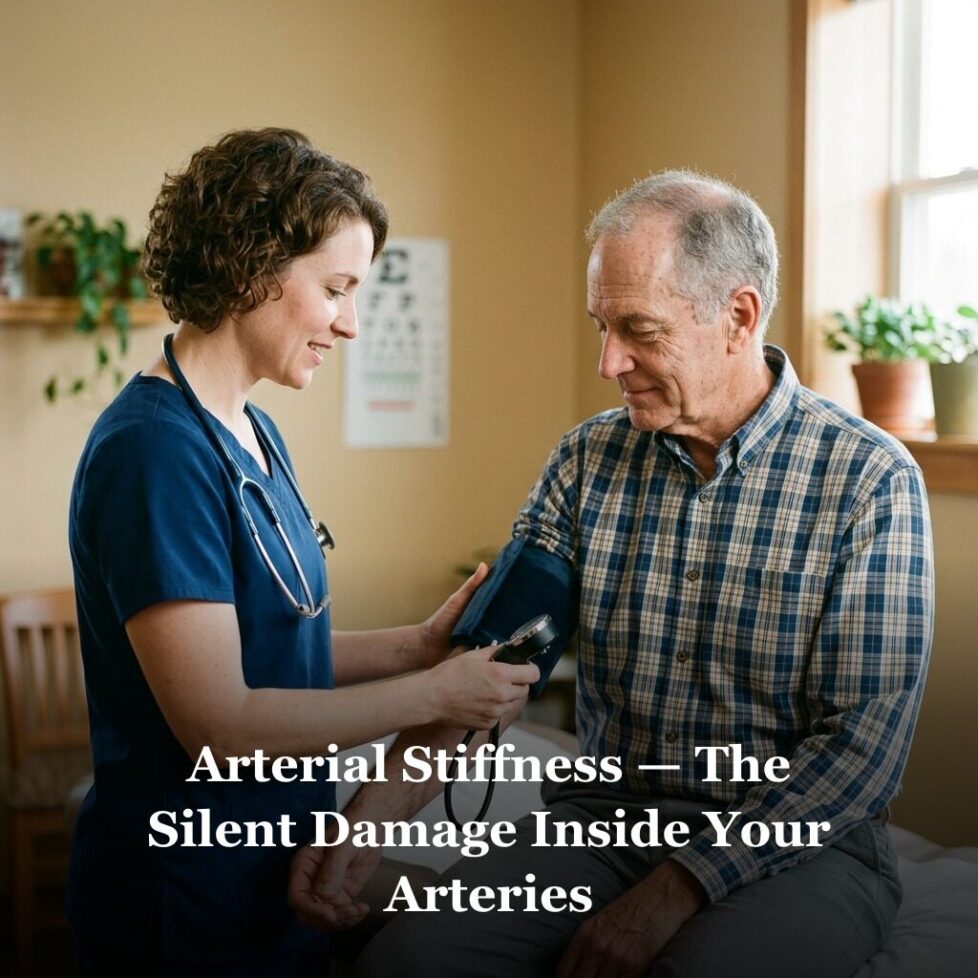
The Silent Damage Happening Inside Your Arteries Right Now
The Silent Damage Happening Inside Your Arteries Right Now
Arterial stiffness means your arteries have lost some of their flexibility — the ability to expand and contract with each heartbeat. It develops silently over decades and is one of the strongest predictors of cardiovascular events. Your cholesterol could look fine. Your blood pressure could be borderline. And this process could still be quietly advancing.
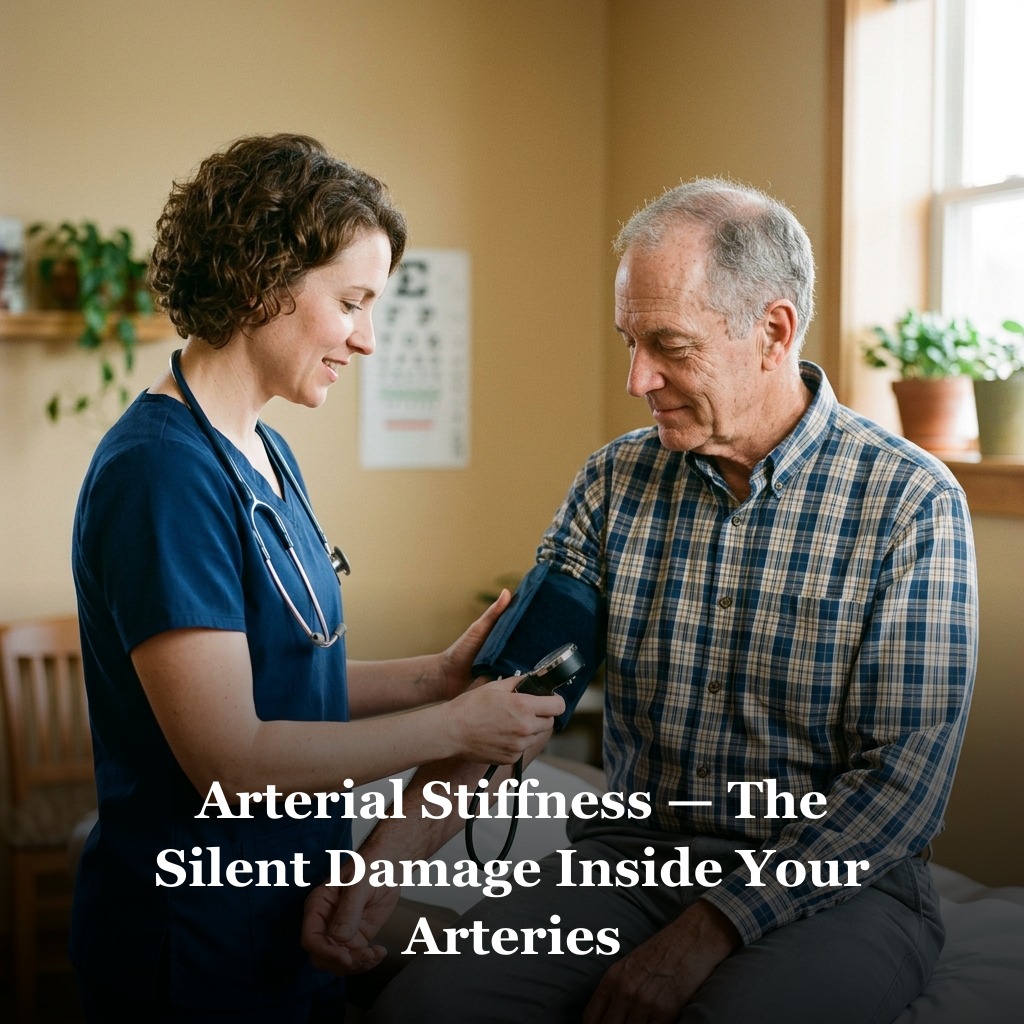
It’s called arterial stiffness. And researchers consider it one of the most important, underappreciated cardiovascular risk factors in adults over 50.
What Are Healthy Arteries Actually Supposed to Do?
Your arteries aren’t just passive tubes that carry blood. They’re dynamic, elastic structures designed to expand and contract with every heartbeat.
When your heart pumps, healthy arterial walls stretch to absorb the pressure wave. Then they recoil, helping push blood forward. This elasticity protects your heart and your organs — especially your brain and kidneys — from the full force of each beat.
Think of a healthy artery like a rubber band. It absorbs force, releases it gradually, and keeps pressure steady throughout the circulatory system. A stiff artery is more like a rigid plastic pipe — the full pressure wave travels through it unabsorbed, reaching the organs and the heart itself with much greater force.
That difference matters more than most people realize.
What Happens as Arteries Stiffen Over Time?
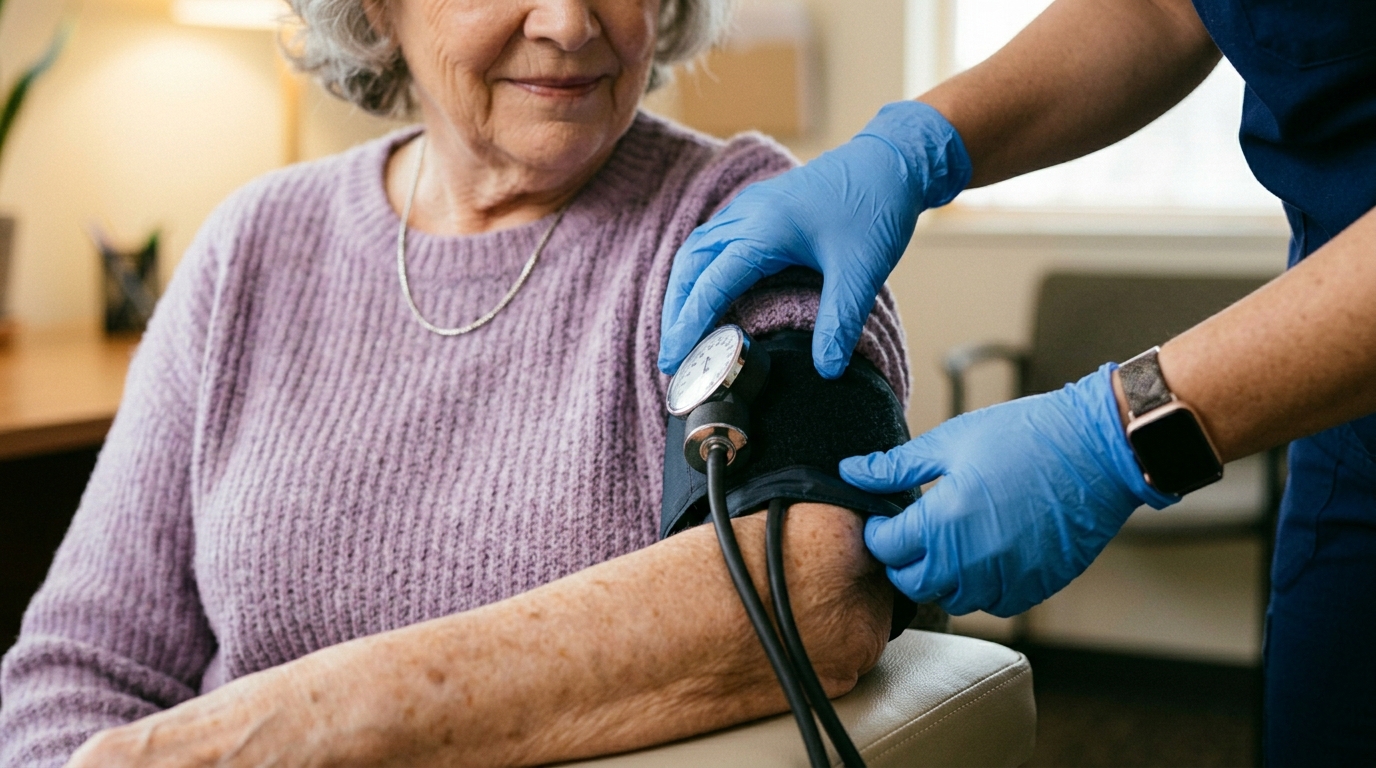
Arterial stiffness increases naturally with age. The structural proteins inside your arterial walls — elastin and collagen — gradually change over time. Elastin breaks down. Collagen accumulates and becomes cross-linked. The result is walls that can’t expand and recoil the way they once did.[1]
But aging isn’t the only driver. Chronic high blood pressure, elevated blood sugar, oxidative stress, and inflammation all accelerate the process — which means many people in their 50s and 60s have arteries that are biologically older than their actual age.
That’s the part that surprises most people. Arterial stiffness doesn’t just track alongside blood pressure — it predicts cardiovascular risk on its own. Even people with controlled blood pressure can have significant arterial stiffness that raises their underlying risk.
Why Doesn’t Your Doctor Mention Arterial Stiffness?
Standard cardiovascular checkups measure your blood pressure, your cholesterol, and your blood sugar. None of those tests directly measures how flexible your arteries are.
The gold-standard test for arterial stiffness is called pulse wave velocity — it measures how fast a pressure wave travels through the arteries. The faster the wave moves, the stiffer the arteries. It’s non-invasive and takes about 10 minutes.
But pulse wave velocity isn’t part of a routine physical. It requires specialized equipment and isn’t widely ordered unless a cardiologist suspects a specific problem. Most people will never have it measured unless they ask.
If you want to inquire about arterial stiffness testing, the terms to ask for are: pulse wave velocity, augmentation index, or a vascular age assessment. Some preventive cardiology practices offer these as part of a comprehensive cardiovascular workup.
What Accelerates Arterial Stiffening — And What Slows It Down
Chronically elevated blood pressure. High blood pressure causes mechanical stress on artery walls over time, prompting structural changes that make them less elastic. Magnesium supports arterial flexibility in part by helping blood vessel walls relax. Blood pressure and arterial stiffness reinforce each other in a feedback loop — stiff arteries raise blood pressure, which accelerates stiffening further.[3]
Elevated blood sugar and insulin resistance. Glucose attaches to proteins in the arterial wall in a process called glycation, forming advanced glycation end-products (AGEs) that stiffen collagen fibers. This is one reason people with pre-diabetes or diabetes have significantly higher rates of arterial stiffness and cardiovascular events.
Chronic inflammation. Inflammatory markers like C-reactive protein are consistently associated with faster progression of arterial stiffness. Inflammation damages the inner lining of arteries — the endothelium — which plays a central role in maintaining arterial flexibility.
Smoking. Even decades-old smoking history is associated with measurably stiffer arteries. The oxidative stress from smoking accelerates the breakdown of elastin and the cross-linking of collagen.
On the other side, research consistently shows that certain lifestyle factors slow the progression:
Regular aerobic exercise — particularly sustained moderate-intensity exercise — has been shown to preserve and even improve arterial elasticity in older adults.[4] The effect is significant enough that researchers have described habitual exercise as one of the most powerful tools for cardiovascular aging.
Nitric oxide availability. The inner lining of your arteries produces nitric oxide — a molecule that signals surrounding muscle tissue to relax, allowing the artery to expand. When nitric oxide production declines (which happens naturally after 40), arteries lose some of their ability to dilate. Supporting nitric oxide pathways is one of the most studied approaches to maintaining endothelial function and arterial flexibility.[5]

Frequently Asked Questions
What is arterial stiffness, and why does it matter?
Arterial stiffness means your arteries have lost some of their elasticity — the ability to expand and contract with each heartbeat. When that happens, the full force of each beat travels through your circulatory system unabsorbed, putting more stress on your heart, brain, and kidneys. It develops gradually and has no symptoms until significant damage has already accumulated.
How do you find out if your arteries are stiff?
The gold-standard test is pulse wave velocity, which measures how fast a pressure wave travels through the arteries. The faster the wave, the stiffer the arteries. It’s non-invasive and takes about 10 minutes. You can also ask about augmentation index or a vascular age assessment. These tests aren’t part of a routine physical but are available through preventive cardiology practices and some specialized clinics.
Why do arteries stiffen — is it just aging?
Aging is the primary cause, but it’s not the only one. The elastic protein inside arterial walls (elastin) breaks down over time while collagen accumulates and stiffens. Chronic high blood pressure, elevated blood sugar, inflammation, oxidative stress, and smoking all accelerate this process — which is why many people in their 50s and 60s have arteries that are biologically older than their actual age.
Can arterial stiffness be slowed down or reversed?
The structural changes can’t be fully reversed, but research consistently shows that certain lifestyle factors slow the progression and may modestly improve arterial elasticity. Regular aerobic exercise is the most powerful tool, with studies showing meaningful improvements in pulse wave velocity in older adults who maintain consistent physical activity. Controlling blood pressure, blood sugar, and inflammation also plays a role.
What is pulse wave velocity?
Pulse wave velocity (PWV) is the speed at which the pressure wave from each heartbeat travels through the arteries — typically measured between the carotid artery in the neck and the femoral artery in the leg. A lower PWV indicates more elastic arteries. A higher PWV indicates stiffer arteries. It’s considered the most reliable clinical measure of arterial stiffness and is validated as an independent predictor of cardiovascular events.
The Bigger Picture
Arterial stiffness illustrates something important about how cardiovascular risk actually works: it isn’t just about the numbers on your standard lab report.
Your arteries could be aging faster than the rest of you — accumulating structural changes that raise your heart attack and stroke risk — while your cholesterol looks perfectly normal and your blood pressure sits at the borderline of acceptable.
That’s the “silent” part. There are no symptoms until there are — by then, the structural damage has been building for years.
Knowing this exists is the first step. Asking your doctor about it is the second. The conversation is worth having.
Want to see the full picture?
Our free Heart Health Guide walks through all 12 cardiovascular risk factors, including the ones most standard blood panels don’t test for. No purchase required.
Get the free Heart Guide →Clinical References
- Laurent S, et al. Expert consensus document on arterial stiffness: methodological issues and clinical applications. Eur Heart J. 2006. View on PubMed →
- Vlachopoulos C, et al. Prediction of cardiovascular events and all-cause mortality with arterial stiffness: a systematic review and meta-analysis. J Am Coll Cardiol. 2010. View on PubMed →
- Safar ME. Arterial stiffness as a risk factor for clinical hypertension. Nat Rev Cardiol. 2018. View on PubMed →
- Seals DR, et al. Habitual exercise and arterial aging. J Appl Physiol. 2008. View on PubMed →
- Taddei S, et al. Aging and endothelial function in normotensive subjects and patients with essential hypertension. Circulation. 1995. View on PubMed →
These statements have not been evaluated by the Food and Drug Administration. This content is for informational purposes only and is not intended to diagnose, treat, cure, or prevent any disease. Always consult your healthcare provider before making changes to your supplement routine or medications.


