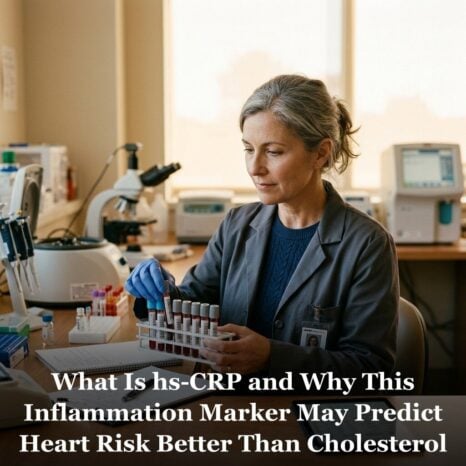
hs-CRP measures low-grade inflammation linked to cardiovascular risk. Learn what it measures, what healthy levels look like, and when to ask your doctor to test it.
Magnesium is involved in over 300 enzymatic reactions, including blood vessel tone regulation. Learn why deficiency is common and what the research shows.
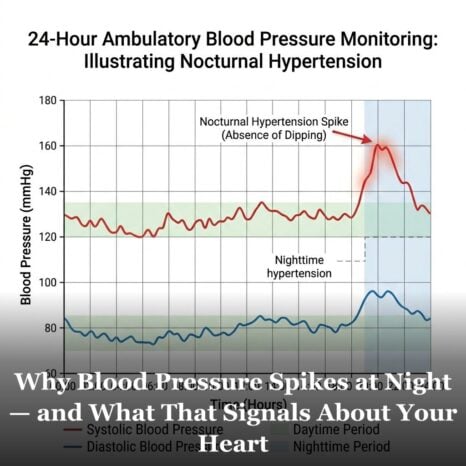
Blood pressure should dip during sleep. Non-dippers have higher cardiovascular risk than daytime readings suggest. Learn what causes this and how to detect it.
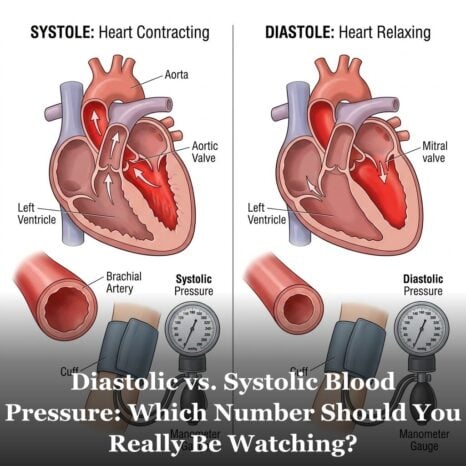
Systolic and diastolic blood pressure tell different stories. Learn which number matters most at different ages and what to watch in your own readings.
{
"@context": "https://schema.org",
"@graph": [
{
"@type": "Article",
"headline": "When to See a Cardiologist — Even If You Feel Fine",
"description": "Most people wait for symptoms before seeing a cardiologist. The research suggests that's exactly backward. Here's who should see…
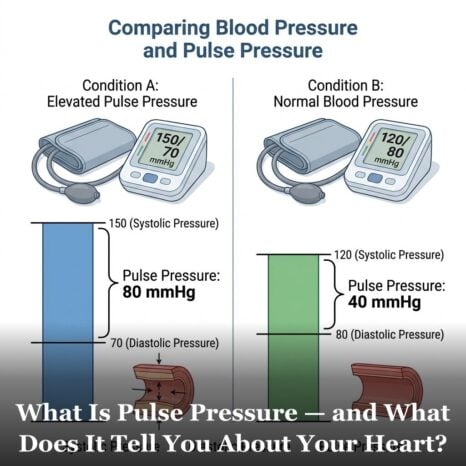
Pulse pressure is the gap between your systolic and diastolic readings. A wide gap may signal arterial stiffening. Learn how to calculate and interpret yours.
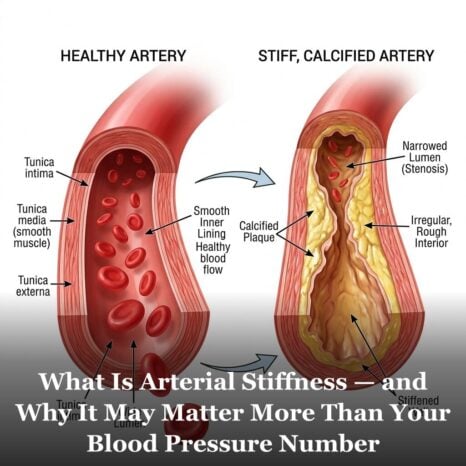
Arterial stiffness is separate from blood pressure and may be a stronger cardiovascular risk predictor in older adults. Learn what it is and what influences it.
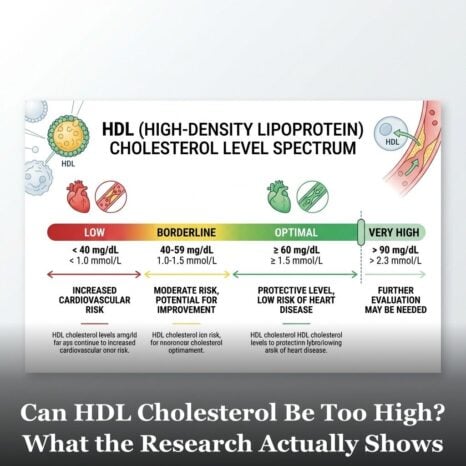
Very high HDL cholesterol has been linked to increased cardiovascular risk in several large studies. Learn why the 'higher is always better' rule breaks down.