
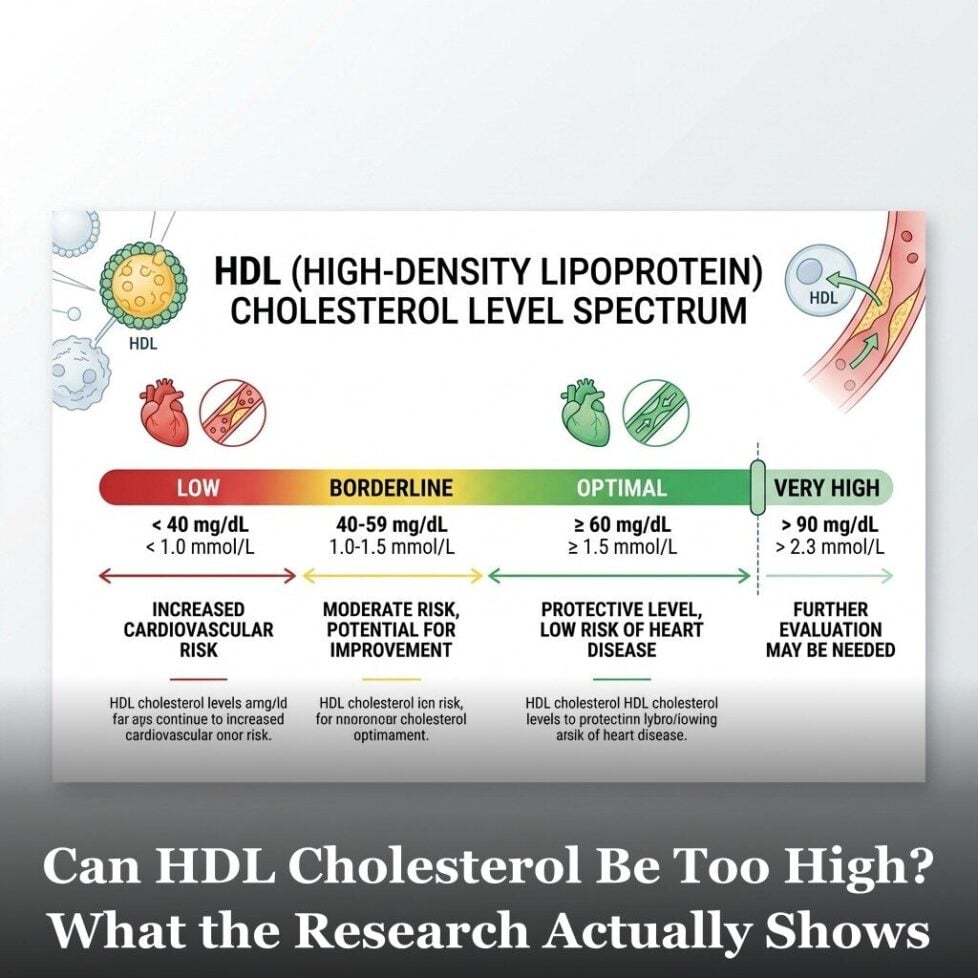
Can HDL Cholesterol Be Too High? What the Research Actually Shows
Can HDL Cholesterol Be Too High? What the Research Actually Shows
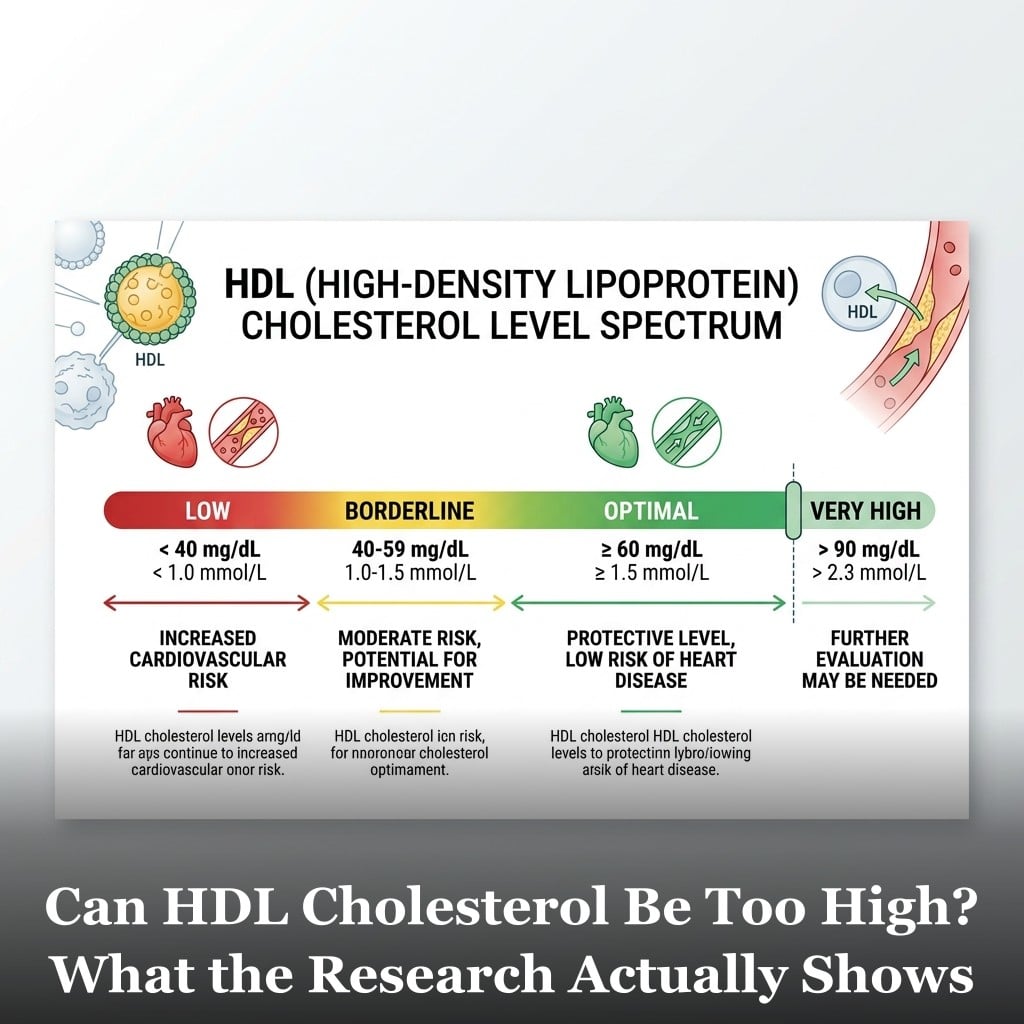
More HDL is always better for your heart. That’s what most people are told. Higher HDL means more “good cholesterol” clearing your arteries, so naturally more should be better. The research says it’s more complicated than that.
Very high HDL levels — above about 80 mg/dL for men and 100 mg/dL for women — have been associated in several studies with increased cardiovascular risk rather than decreased risk. This finding surprised researchers and has reshaped how cardiologists think about HDL.
Understanding why helps clarify what HDL actually does and why the quality of HDL function may matter as much as its quantity.
Why the “Higher Is Always Better” Rule Breaks Down
HDL is often called “good cholesterol” because it plays a role in reverse cholesterol transport — the process by which cholesterol is removed from arterial walls and transported back to the liver for processing. For decades, this made high HDL seem straightforwardly protective.
The problem is that raising HDL artificially doesn’t consistently improve cardiovascular outcomes. Several large clinical trials of drugs specifically designed to raise HDL failed to reduce cardiovascular events even as HDL levels rose significantly. This suggested that HDL quantity and HDL function are different things.
The same logic applies at the extreme upper end of the natural distribution. Very high HDL levels aren’t necessarily reflecting better function. They may reflect dysfunction in the systems that regulate HDL turnover and clearance.
What Very High HDL May Signal
When HDL levels are extremely high, several mechanisms may be at work. Genetic variants that cause HDL to stay in circulation longer can produce very high readings, but the HDL particles in these cases may not function normally. They accumulate rather than turning over efficiently.
Dysfunctional HDL can lose its anti-inflammatory and antioxidant properties. In some cases, it may even become pro-inflammatory. The particle count goes up, but the beneficial activity goes down or reverses.
Heavy alcohol consumption is another driver of very high HDL. Alcohol raises HDL through mechanisms that don’t appear to translate into cardiovascular protection — which is one reason the alcohol-HDL relationship has not been shown to be beneficial when studied carefully in clinical trials.
Very high HDL can also occur in people with certain thyroid conditions, liver disease, or rare genetic disorders affecting lipid metabolism. When a doctor sees unusually high HDL, investigation into the cause is appropriate rather than treating it simply as a favorable sign.
The Real Goal: HDL Function, Not Just HDL Numbers
The more important question about your HDL isn’t just the number — it’s what that number reflects about your metabolic health. Moderate, healthy HDL levels achieved through regular exercise, a whole-food diet, maintaining a healthy weight, and not smoking reflect genuine cardiovascular protection. Those behaviors drive real function.
Exercise is the most reliable modifiable influence on HDL. Regular aerobic activity consistently raises HDL in clinical research, and the HDL raised by exercise appears to be more functionally active than HDL raised by other means.
If your HDL is in the moderate-to-healthy range (above 50 for women, above 40 for men) and the rest of your metabolic markers look good, that’s a favorable sign. If your HDL is extremely high without an obvious healthy explanation, it’s worth discussing with your doctor — not as something to celebrate, but as something to investigate.
For the full context of how HDL fits into overall cardiovascular health and the other markers worth tracking, see the 12 cardiovascular risk factors. And for how triglycerides interact with HDL in the risk picture, the trig/HDL ratio article explains the relationship in detail.
Frequently Asked Questions
What is a dangerously high HDL level?
The research concern starts around 80 mg/dL for men and 100 mg/dL for women in terms of the J-curve associations. However, context matters enormously. If high HDL is driven by regular vigorous exercise and a healthy lifestyle, the concern is much lower than if the same number appears in someone with heavy alcohol use or a metabolic condition. Your doctor can help evaluate what your specific HDL level means.
Should I try to lower my HDL if it’s very high?
This is a question for your doctor based on your full clinical picture. Generally, if extremely high HDL appears to be driven by an underlying condition like thyroid dysfunction or heavy alcohol use, addressing that condition is the appropriate response. There is no established intervention specifically designed to lower HDL, and the risk thresholds are still being refined by researchers.
How does exercise affect HDL?
Regular aerobic exercise is the most reliable lifestyle factor for raising HDL. The effect is dose-dependent — more exercise produces larger increases. The HDL raised by exercise appears to be functionally active, meaning it participates in reverse cholesterol transport more effectively. This is one reason exercise-driven HDL increases are generally viewed more favorably than pharmacologically-driven increases.
Does diet affect HDL levels?
Diet has a more modest effect on HDL than exercise. Replacing refined carbohydrates with healthy fats (olive oil, avocado, nuts) tends to modestly raise HDL. Reducing trans fats lowers both LDL and HDL. The overall dietary pattern matters more than any single food. Mediterranean-style eating has the best evidence for supporting favorable HDL levels as part of a broader healthy lipid profile.
Get Your Free Heart Book
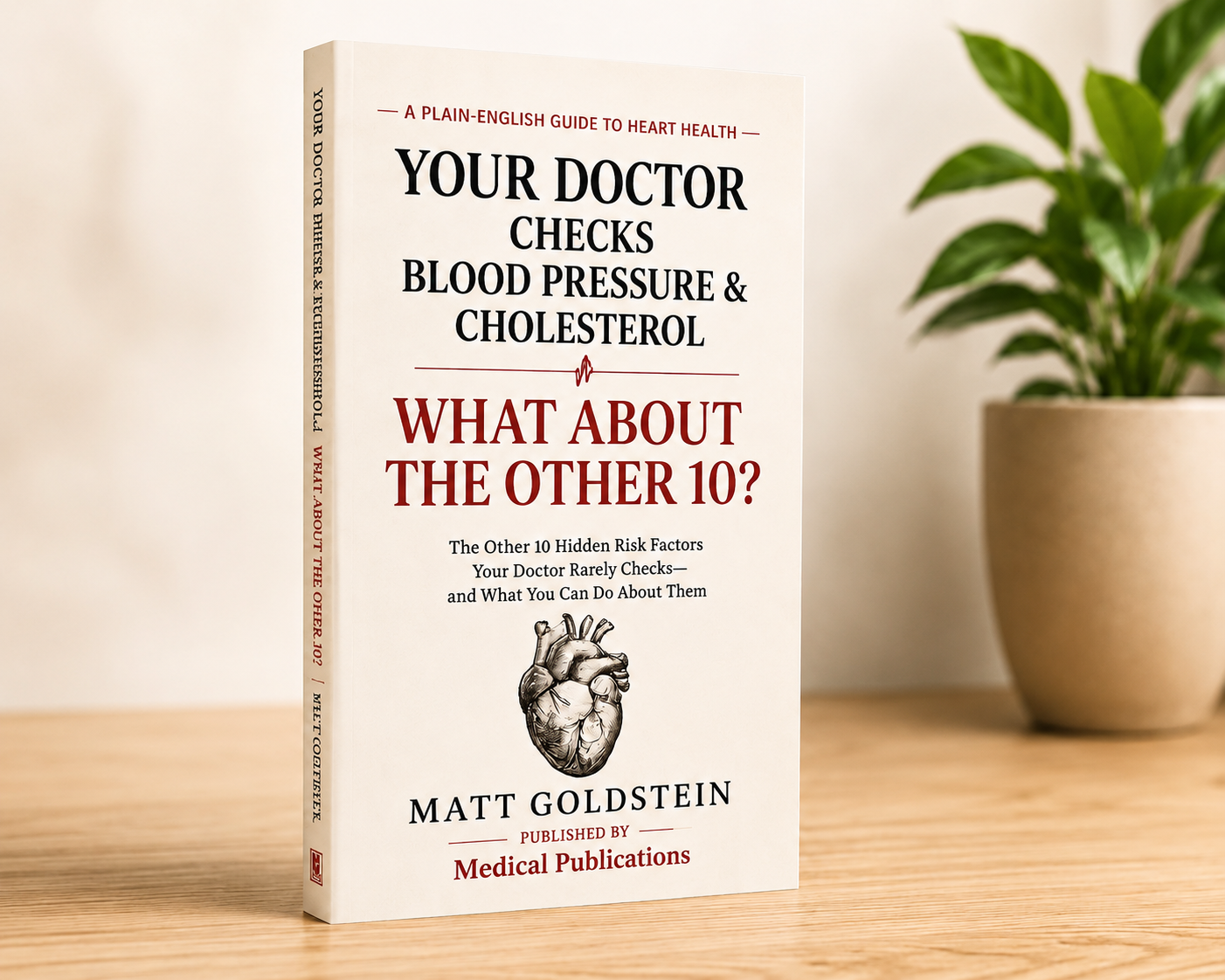
Your Doctor Checks Blood Pressure & Cholesterol: What About the Other 10?
Most heart attacks happen to people whose last checkup came back “fine.” This book covers the 12 risk factors your doctor may not be testing — in plain English, backed by research.
Get the Free Book →* These statements have not been evaluated by the Food and Drug Administration. This product is not intended to diagnose, treat, cure, or prevent any disease.


