
What Is Pulse Pressure and What Does It Tell You About Your Heart?
What Is Pulse Pressure and What Does It Tell You About Your Heart?
Most people think of their blood pressure as two numbers. But there’s a third calculation hiding inside those two numbers that cardiologists have been watching for decades. It takes about five seconds to figure out from any blood pressure reading. And it can reveal something about your arterial health that the individual numbers don’t.
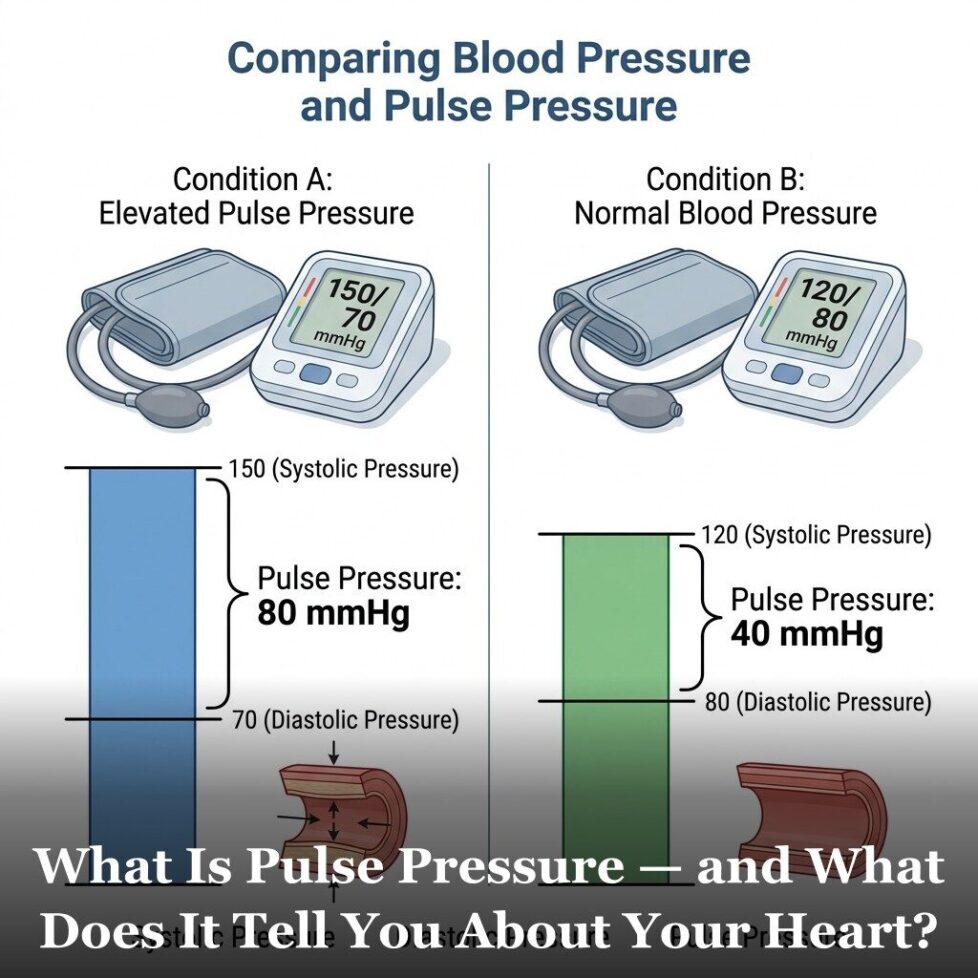
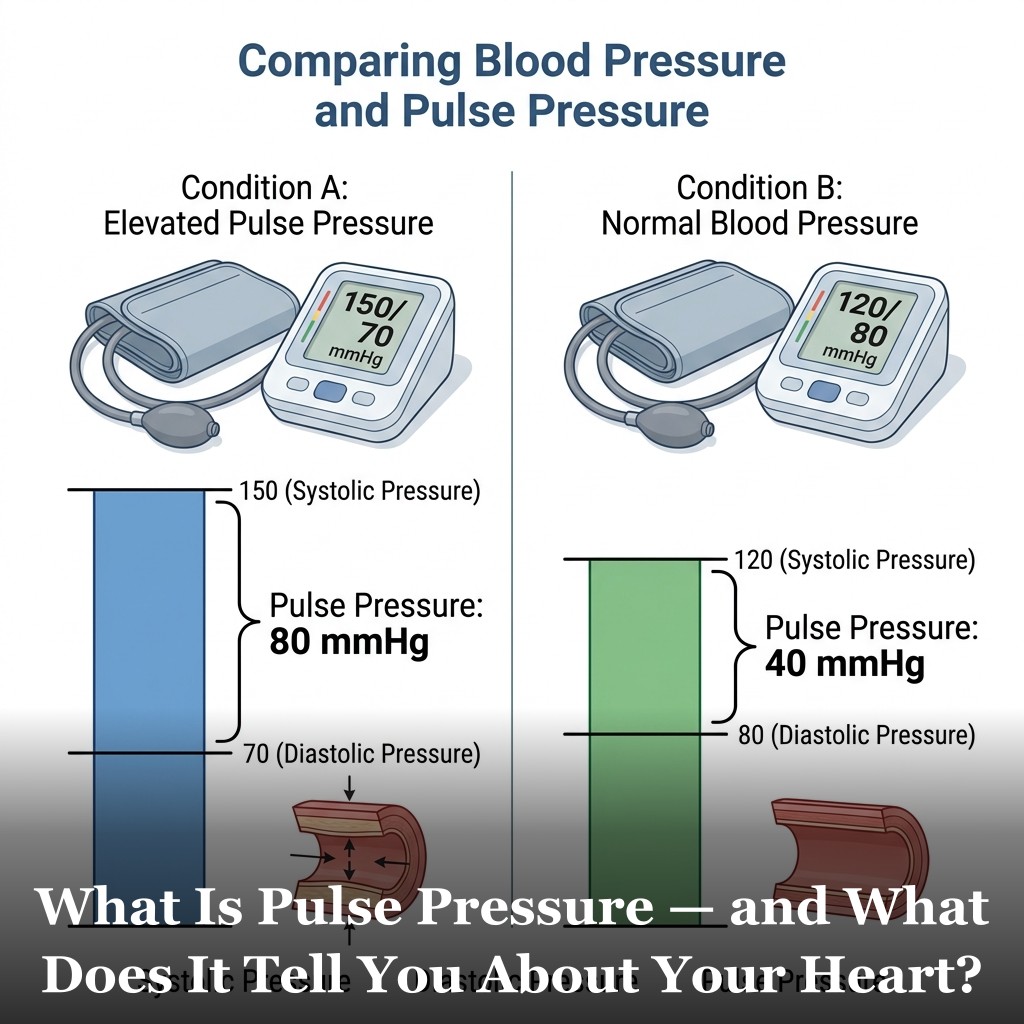
It’s called pulse pressure. Subtract your diastolic (bottom) number from your systolic (top) number. If your blood pressure is 130/75, your pulse pressure is 55. If it’s 145/72, it’s 73. That gap tells a story about how much cushioning your major arteries still have — and when the gap gets wide, it’s worth paying attention to.
What Pulse Pressure Actually Measures
Systolic blood pressure reflects the force your heart generates with each contraction. Diastolic pressure reflects the pressure remaining in your arteries between beats, when your heart is relaxed and refilling.
In a healthy cardiovascular system, the major arteries — especially the aorta — act like a pressure buffer. They expand when the heart contracts, absorbing some of that force, then recoil between beats to keep blood moving forward. This buffer smooths out the pressure wave and keeps the difference between systolic and diastolic relatively modest.
When arteries become stiffer with age or damage, they lose that buffering capacity. Systolic pressure tends to rise because the heart must generate more force to push blood through less elastic vessels. Diastolic pressure may stay the same or even fall as blood drains out faster between beats. The gap between the two numbers grows.
A pulse pressure above 60 points is generally considered wide in most clinical contexts. This threshold has been associated with elevated cardiovascular risk in multiple large population studies.
What a Wide Pulse Pressure Can Indicate
A widening pulse pressure is primarily a sign of reduced arterial elasticity — what researchers call increased arterial stiffness. This is different from hypertension in the traditional sense, though the two often coexist and one can drive the other over time.
Isolated systolic hypertension — where systolic blood pressure is elevated but diastolic is normal — is the most common form of hypertension in adults over 60. It’s essentially a manifestation of age-related arterial stiffening. When systolic goes up but diastolic stays flat or even drops, the pulse pressure widens.
Severe aortic regurgitation (a leaky aortic valve) can also produce a very wide pulse pressure by allowing blood to flow backward during diastole, which drops diastolic pressure dramatically. Other causes include fever, anemia, and thyrotoxicosis. A very wide pulse pressure warrants investigation by a doctor to determine the underlying cause.
For the deeper context on why arterial stiffness matters and how it develops, see our arterial stiffness article.
When to Talk to Your Doctor About Pulse Pressure
A pulse pressure below 40 points is generally considered normal. Between 40 and 60 is the borderline range. Above 60 is consistently defined as wide in most clinical guidelines and research, though some sources use 50 as the threshold depending on context.
If your blood pressure is consistently producing a wide pulse pressure, it’s worth bringing up with your doctor. This is especially true if your systolic is creeping up while your diastolic stays flat or drops — a pattern worth investigating.
The conversation doesn’t need to be alarming. Pulse pressure is one piece of context within a broader cardiovascular picture. It becomes most clinically significant when it’s worsening over time, when the individual blood pressure numbers are also elevated, or when it appears alongside other risk factors.
For a complete picture of the cardiovascular risk factors worth monitoring, see the 12 cardiovascular risk factors. The blood pressure categories covered in these articles — pulse pressure, diastolic versus systolic, and nocturnal patterns — each capture a different dimension that a single reading can miss.

Frequently Asked Questions
Is a pulse pressure of 50 normal?
A pulse pressure of 40-50 is generally considered normal to borderline. Below 40 is considered normal. Above 60 is generally defined as wide. A single reading of 50 is not usually concerning on its own, particularly in younger adults. What matters more is the trend over multiple readings and the context of the individual blood pressure numbers. Talk to your doctor if your pulse pressure is consistently on the higher end.
Can you have a wide pulse pressure with normal blood pressure?
Yes. If your systolic is 130 and your diastolic is 68, your blood pressure may fall within acceptable ranges but your pulse pressure of 62 is wide. This pattern — where individual readings look borderline but the gap is large — is worth noting. Some cardiologists focus more on the pattern of widening over time than on a single absolute number.
Does exercise affect pulse pressure?
During vigorous exercise, pulse pressure naturally widens because the heart is contracting forcefully and cardiac output is high. This is normal and expected. It’s resting pulse pressure — measured when you’re calm and sitting for several minutes — that reflects vascular health. Exercise over time can actually improve resting pulse pressure by improving arterial elasticity and lowering systolic blood pressure.
What can widen pulse pressure?
The most common cause is age-related arterial stiffening, which raises systolic while diastolic stays flat or drops. Other causes include sustained high blood pressure, severe aortic valve regurgitation, significant anemia, fever, thyroid dysfunction, and advanced atherosclerosis. If pulse pressure is very wide (above 80 points) or has changed significantly, evaluation by a physician is warranted.
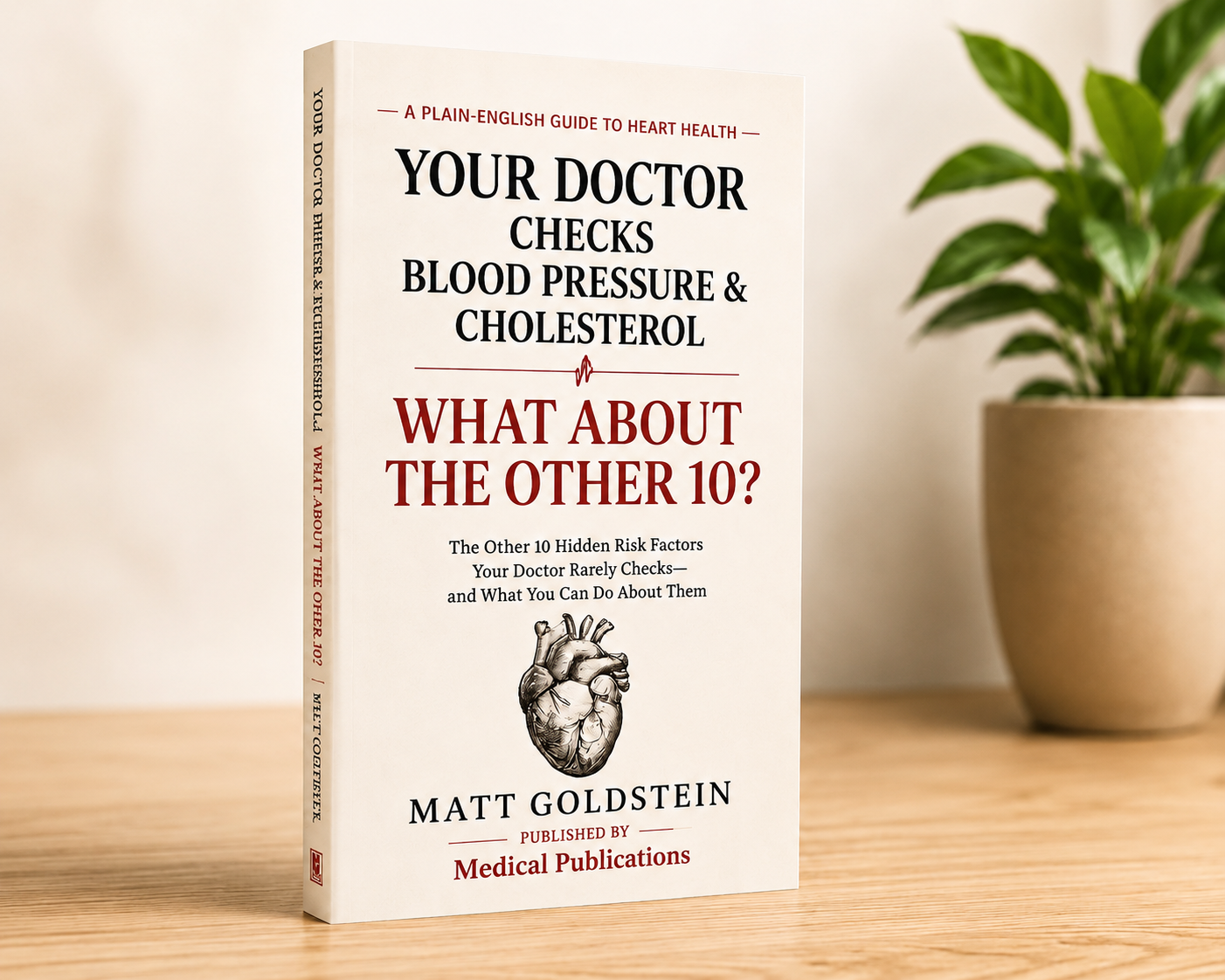
Get Your Free Heart Book
Your Doctor Checks Blood Pressure & Cholesterol: What About the Other 10?
Most heart attacks happen to people whose last checkup came back “fine.” This book covers the 12 risk factors your doctor may not be testing — in plain English, backed by research.
Get the Free Book →* These statements have not been evaluated by the Food and Drug Administration. This product is not intended to diagnose, treat, cure, or prevent any disease.


