
What Chronic Stress Actually Does to Your Cardiovascular System
What Chronic Stress Actually Does to Your Cardiovascular System
Stress triggers a real physiological cascade: elevated heart rate, rising blood pressure, surging cortisol, inflammation. For short bursts, that response is useful. When it never fully turns off, it becomes a cardiovascular risk factor that most doctors don’t measure and most patients don’t connect to their heart health.

Chronic stress doesn’t just feel bad. It changes your blood pressure, your cholesterol, your inflammation levels, and the structure of your arterial walls over time.
The problem with stress as a cardiovascular risk factor is that it’s invisible on a standard lab panel. Your doctor can see your LDL cholesterol. They can measure your blood pressure in the office. But the chronic low-grade activation of your stress response, what researchers call HPA axis dysregulation, doesn’t show up on a routine checkup.
And yet the research is consistent. Study after study has found that people under chronic psychological stress have worse cardiovascular outcomes. The question worth understanding is why — mechanically, what does ongoing stress actually do inside your cardiovascular system?

What the Acute Stress Response Does to Your Heart and Arteries
When your brain perceives a threat, the hypothalamus triggers a cascade. Adrenaline (epinephrine) floods your system within seconds. Cortisol follows over the next several minutes. Together, they prepare your body to fight or flee.
Your heart rate climbs. Blood pressure rises. Blood glucose spikes as your liver dumps stored sugar for quick energy. Blood is redirected away from digestion toward your muscles. Your blood becomes more prone to clotting — useful if you might be injured in a physical confrontation.
All of that is appropriate for a real, acute threat. The problem is that your nervous system can’t always tell the difference between a physical threat and a psychological one. A difficult meeting, a financial worry, a difficult relationship — the same cascade fires. And unlike a physical threat, which ends, psychological stress often doesn’t.
Why “Never Fully Recovering” Is the Key Phrase
The HPA axis (hypothalamic-pituitary-adrenal axis) is the system that regulates cortisol. Under normal circumstances, it’s a feedback loop: cortisol rises in response to stress, then signals the brain to turn off the cortisol response once the threat has passed. The system resets.
Under chronic stress, that reset becomes incomplete. Cortisol levels never fully return to baseline. The system stays partially activated. Researchers call this HPA axis dysregulation, and it has direct cardiovascular consequences.
Cortisol at chronically elevated levels promotes visceral fat accumulation, the deep abdominal fat that wraps around internal organs. Visceral fat is metabolically active. It releases inflammatory cytokines directly into the portal circulation that feeds the liver. That inflammation drives up C-reactive protein, promotes insulin resistance, and creates an environment where arterial damage is more likely.
This is how chronic stress connects to so many other cardiovascular risk factors at once. It’s not a single mechanism. It’s a cascade that touches blood pressure, inflammation, lipid metabolism, and blood sugar simultaneously.
How Chronic Stress Contributes to Arterial Stiffness
One of the less-discussed effects of chronically elevated cortisol is its impact on the arterial wall itself. Research has associated sustained HPA axis activation with increased arterial stiffness, measured as pulse wave velocity, a marker that reflects how much elasticity the arteries have lost.
Cortisol promotes the activity of angiotensin-converting enzyme (ACE), which raises blood pressure by constricting blood vessels. Over time, arteries that are frequently exposed to higher pressure begin to remodel structurally. The wall thickens. Elastic fibers break down. The artery becomes less able to expand and contract with each heartbeat.
Arterial stiffness is now recognized as an independent cardiovascular risk factor, separate from blood pressure itself. It puts added strain on the heart, which has to pump against stiffer vessels. And chronic stress appears to accelerate this process.
Sleep and Stress: You Can’t Fix One Without Addressing the Other
Sleep deprivation and chronic stress are so tightly linked that it’s difficult to discuss one without the other. Elevated cortisol at night, a hallmark of chronic stress, interferes with sleep quality and duration. Poor sleep, in turn, raises cortisol the next day. The two amplify each other in a cycle that’s hard to break.
Research has consistently associated short sleep duration with elevated blood pressure, higher inflammatory markers, and increased cardiovascular event risk. A meta-analysis published in the European Heart Journal found that sleeping fewer than 6 hours per night was associated with a 48% higher risk of developing or dying from coronary heart disease compared to those sleeping 7-8 hours.[2]
If you’re chronically stressed and not sleeping well, addressing sleep is arguably as important as any other cardiovascular intervention. The cardiovascular benefits of adequate sleep are well-documented and underappreciated.

Social Isolation as an Underappreciated Cardiovascular Risk Factor
The Framingham Heart Study, one of the longest-running cardiovascular research projects ever conducted, found that social connections had a measurable effect on cardiovascular outcomes. People who were socially isolated had significantly worse outcomes than those with strong social networks.
Loneliness and social isolation activate the same stress response as other psychological stressors. They raise cortisol, increase inflammation, disrupt sleep, and have been associated with higher blood pressure. A meta-analysis published in Perspectives on Psychological Science found that social isolation was associated with a 29% increased risk of coronary heart disease.[3]
This is an underappreciated part of cardiovascular health. Social connection isn’t a soft wellness concept. It has real physiological effects, and the research supports treating it as a genuine health factor.
What the Research Associates With Countering the Stress Response
The question most people want answered is: what actually helps?
Consistent sleep schedule. Going to bed and waking at the same time, even on weekends, helps regulate the cortisol rhythm. Cortisol is supposed to peak in the morning and decline through the day. A chaotic sleep schedule disrupts that rhythm and keeps the system dysregulated.
Moderate aerobic exercise. This is one of the more consistent findings in the research. Regular moderate-intensity exercise, walking, cycling, swimming, has been associated with lower cortisol levels, improved heart rate variability, and reduced inflammatory markers. High-intensity exercise without adequate recovery can do the opposite, so the dose matters.
Magnesium. Magnesium plays a role in regulating the stress response at a neurological level. It helps modulate the NMDA receptor involved in cortisol secretion. Research has associated low magnesium levels with heightened stress reactivity and worse cardiovascular markers. Magnesium deficiency is surprisingly common and worth understanding in this context.
Breathing techniques. Slow, controlled breathing, specifically around 6 breaths per minute, activates the parasympathetic nervous system and counteracts the sympathetic activation of the stress response. Research has associated this approach with lower blood pressure and improved heart rate variability in clinical settings.
Nature exposure. Multiple studies, particularly from Japanese research on “forest bathing” (shinrin-yoku), have found associations between time in natural environments and lower cortisol, lower blood pressure, and improved immune markers. The mechanism isn’t fully understood, but the data is consistent enough to be worth noting.
Social connection. Given the data on isolation, intentionally maintaining close relationships appears to be a genuine cardiovascular protective factor, not just a quality-of-life consideration.
The Connection to Other Cardiovascular Risk Factors
Chronic stress doesn’t operate in isolation. It connects to nearly every other cardiovascular risk factor through multiple pathways.
It raises blood pressure directly through sympathetic nervous system activation. It raises triglycerides through cortisol’s effect on fat metabolism. It promotes insulin resistance, which is a major independent cardiovascular risk factor. It accelerates arterial stiffness. It disrupts sleep, which compounds all of the above. And it often leads to behavioral changes, worse diet, less exercise, more alcohol, that add further cardiovascular load.
This is why stress management isn’t just a wellness topic. It sits squarely within the framework of cardiovascular risk. The 12 cardiovascular risk factors that research has consistently identified include several that chronic stress directly worsens: blood pressure, inflammation, blood sugar, arterial stiffness, and triglycerides.
Understanding chronic stress and heart health together gives you a more complete picture of why some people’s cardiovascular risk is hard to explain by their lipid panel alone.

*These statements have not been evaluated by the Food and Drug Administration. This product is not intended to diagnose, treat, cure, or prevent any disease.
Frequently Asked Questions
If your blood pressure only spikes during stressful moments, is that still a cardiovascular risk?
Yes, and it’s often underappreciated. Repeated stress-induced blood pressure spikes cause cumulative wear on arterial walls over time, even if your resting blood pressure reads normal. Research has associated frequent episodic blood pressure surges with increased risk of arterial damage and cardiovascular events independent of baseline blood pressure. The walls of your arteries experience that pressure surge every time — and the wear accumulates.
Why do people have heart attacks after major emotional events — is that real?
It’s real and well-documented. A phenomenon called Takotsubo cardiomyopathy, sometimes called “broken heart syndrome,” occurs when extreme emotional stress triggers a massive surge of stress hormones that temporarily stuns the heart muscle. Separately, research has consistently shown that acute emotional events — grief, anger, sudden fright — can trigger cardiac events in people with underlying cardiovascular disease by causing sudden arterial spasm or vulnerable plaque rupture.
How does chronic stress connect to high cholesterol and triglycerides?
Cortisol, the primary stress hormone, promotes the release of glucose and fatty acids into the bloodstream for quick energy. Under chronic stress, this leads to persistently elevated blood triglycerides and can contribute to unfavorable changes in cholesterol patterns. Cortisol also promotes visceral fat accumulation, and visceral fat releases inflammatory compounds that further disrupt lipid metabolism — creating a feedback loop that standard lipid panels often don’t capture.
Does meditation or deep breathing actually do anything for your heart?
The research is more supportive than most people expect. Studies have associated regular meditation with measurable reductions in blood pressure, lower cortisol levels, and improved heart rate variability. Deep breathing that slows the breath to around 6 cycles per minute activates the parasympathetic nervous system, directly counteracting the stress response. A review published in the Journal of the American Heart Association found consistent associations between mindfulness-based interventions and improvements in cardiovascular markers. These aren’t cures, but the physiological effects are real.
Why does magnesium keep coming up in discussions about stress and heart health?
Magnesium plays a role in regulating the stress response at a neurological level. It helps modulate the NMDA receptor, which is involved in cortisol secretion and stress reactivity. Research has associated low magnesium levels with heightened stress response, increased anxiety, and cardiovascular outcomes including elevated blood pressure and arterial stiffness. Many adults don’t get enough magnesium through diet alone, making it a commonly deficient mineral that intersects with both stress physiology and cardiovascular health.
Stress Is a Cardiovascular Risk Factor — Not Just a Feeling
The shift in how researchers think about stress and cardiovascular health has been significant over the past two decades. It’s no longer treated as a soft risk factor or a lifestyle consideration. The mechanistic pathways are clear: HPA axis dysregulation, cortisol-driven inflammation, arterial stiffness, sleep disruption, lipid changes, and behavioral consequences all connect chronic psychological stress to measurable cardiovascular outcomes.
What that means practically is that managing stress is cardiovascular medicine. It belongs in the same conversation as cholesterol, blood pressure, and blood sugar. The 12 cardiovascular risk factors that standard medicine often overlooks include several that only make sense when you understand how stress connects them.
For more context on specific risk factors that chronic stress directly affects, see the articles on magnesium and blood pressure and arterial stiffness. The connections run deeper than most people realize.
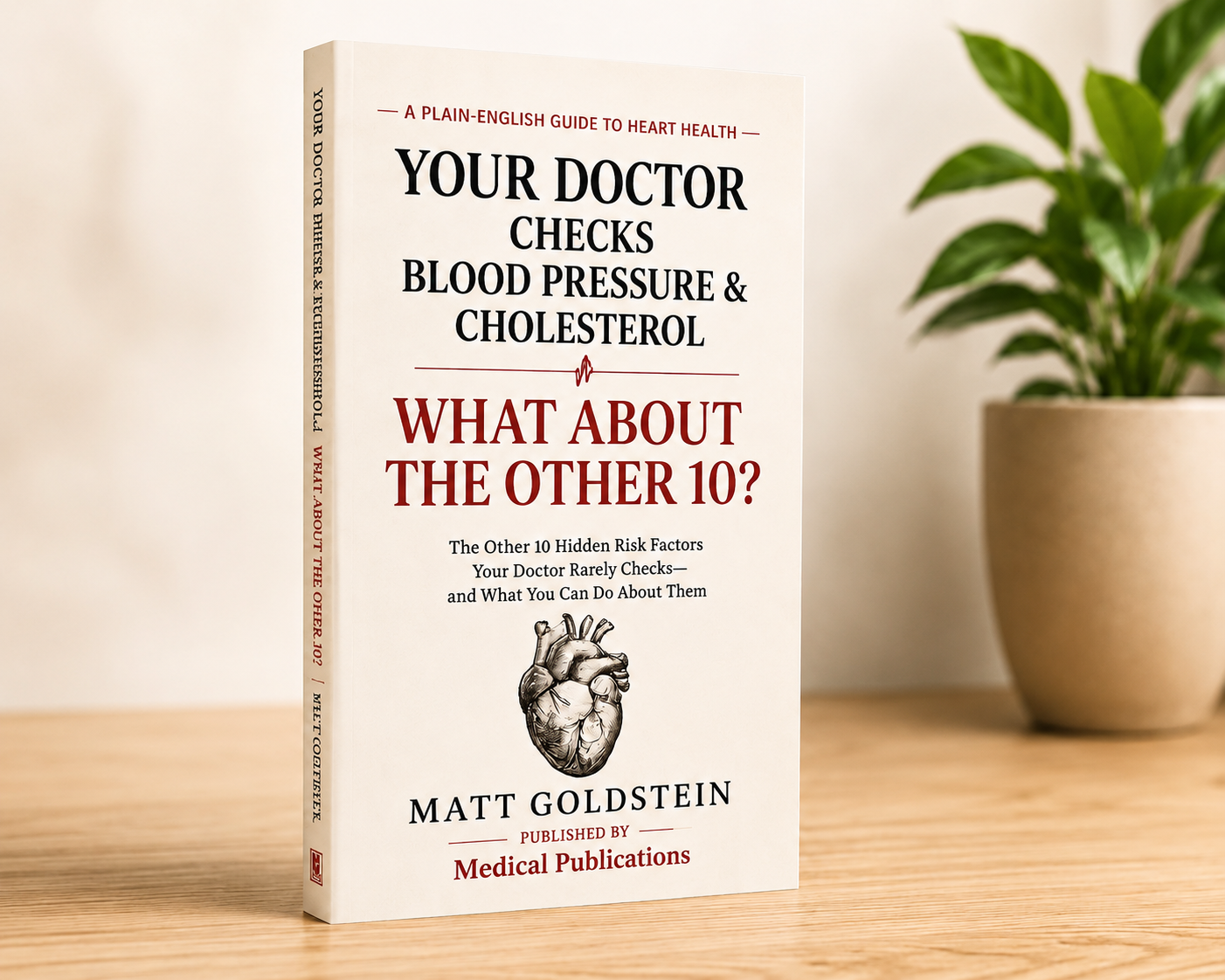
Get Your Free Heart Book
Your Doctor Checks Blood Pressure & Cholesterol: What About the Other 10?
Most heart attacks happen to people whose last checkup came back “fine.” This book covers the 12 risk factors your doctor may not be testing — in plain English, backed by research.
*These statements have not been evaluated by the Food and Drug Administration. This product is not intended to diagnose, treat, cure, or prevent any disease. This article is for educational purposes only and does not constitute medical advice. Always consult your healthcare provider before making changes to your health regimen.
References
- Kivimäki M, et al. Job strain as a risk factor for coronary heart disease: a collaborative meta-analysis of individual participant data. Lancet. 2012;380(9852):1491-1497. PMID: 22813607
- Cappuccio FP, et al. Sleep duration and all-cause mortality: a systematic review and meta-analysis of prospective studies. Sleep. 2010;33(5):585-592. PMID: 20469800
- Holt-Lunstad J, et al. Loneliness and social isolation as risk factors for mortality. Perspect Psychol Sci. 2015;10(2):227-237. PMID: 26767422
- Rozanski A, et al. The epidemiology, pathophysiology, and management of psychosocial risk factors in cardiac practice. J Am Coll Cardiol. 2005;45(5):637-651. PMID: 15734605
- Kivimäki M, Steptoe A. Effects of stress on the development and progression of cardiovascular disease. Nat Rev Cardiol. 2018;15(4):215-229. PMID: 29213140
- Seeman TE, et al. Allostatic load as a marker of cumulative biological risk: MacArthur studies of successful aging. Proc Natl Acad Sci USA. 2001;98(8):4770-4775. PMID: 11287659


