

Heart Rhythm and Cardiovascular Health: What Influences the Electrical System of Your Heart
Heart Rhythm and Cardiovascular Health: What Influences the Electrical System of Your Heart
Your heart beats around 100,000 times a day, and each beat is triggered by an electrical signal that travels through a precise pathway. When that signaling becomes irregular, it’s called an arrhythmia. Some arrhythmias are harmless. Others require medical attention. Understanding what drives heart rhythm — and what can disrupt it — is one of the more practical things you can do for your cardiovascular health.

Arrhythmia is not one thing. It’s a category of electrical disruptions, ranging from completely harmless extra beats to conditions that need ongoing management. The same heart. Very different experiences.
What Is an Arrhythmia — and What Causes the Electrical System to Go Off?
An arrhythmia is any disruption to the normal rhythm of your heartbeat. That includes beats that are too fast, too slow, or simply out of sequence. The word sounds alarming, but the reality is more nuanced.
Premature ventricular contractions (PVCs) — the feeling that your heart skipped a beat or did a little flip — are one of the most common types of arrhythmia. They affect a large portion of the population and, in people without underlying heart disease, are generally considered benign. On the other end of the spectrum, atrial fibrillation (AFib) is the most common serious arrhythmia, and it does carry meaningful health implications if left unmanaged.
Understanding the difference starts with understanding how the heart’s electrical system actually works.
How Does the Heart’s Electrical System Work?
Every heartbeat starts with a signal from the sinoatrial (SA) node, a small cluster of specialized cells in the upper right chamber of the heart. This is your heart’s natural pacemaker. It fires an electrical impulse that spreads across the atria (the upper chambers), causing them to contract.
That signal then reaches the atrioventricular (AV) node, which acts like a relay station. It briefly delays the signal before passing it down through a network of fibers called the bundle of His and then the Purkinje fibers, which carry the impulse into the ventricles (the lower chambers). The ventricles contract, pumping blood out to the body and lungs.
This entire sequence happens in under a second, roughly 60 to 100 times per minute at rest. When any part of this pathway misfires — or when another area of the heart generates a competing signal — you get an arrhythmia.
Bradycardia: heart rate consistently below 60 bpm (not always a problem — athletes often have naturally low resting rates). Tachycardia: heart rate consistently above 100 bpm at rest. Atrial fibrillation: chaotic, uncoordinated firing of the atria — the most common serious type. PVCs: extra beats that originate in the ventricles — very common and usually harmless in people without structural heart disease.
What Does Research Say About the Risk Factors Linked to Irregular Heart Rhythms?
Arrhythmias don’t come out of nowhere. Research has consistently identified a set of factors associated with higher rates of irregular rhythms, and several of them are modifiable.
High blood pressure is one of the strongest links. Over time, elevated blood pressure can cause the heart’s chambers to enlarge or stiffen, which disrupts the normal electrical pathways. This is one reason managing blood pressure matters well beyond its direct effects on the arteries. You can read more about magnesium and blood pressure and how electrolyte balance plays into both.
Sleep apnea is another significant factor. During apnea events, oxygen levels drop and the nervous system is repeatedly activated in ways that can stress the heart’s electrical system. Research has associated untreated sleep apnea with higher rates of AFib.
Excessive alcohol use is strongly linked to arrhythmia. There’s even a term for it: “holiday heart syndrome,” named for the pattern of AFib episodes showing up after heavy drinking. Even moderate alcohol consumption can trigger episodes in some people who are sensitive to it.
Thyroid dysfunction, particularly an overactive thyroid (hyperthyroidism), is a known contributor to tachycardia and AFib. Thyroid hormone has direct effects on heart rate and electrical conduction. This is one reason thyroid testing is often part of a cardiac workup.
Structural heart disease matters too. Conditions like heart failure, prior heart attack, or valve disease can alter the physical architecture of the heart in ways that affect electrical pathways. Understanding the full picture of 12 cardiovascular risk factors helps explain why heart health is so interconnected.
Why Do Electrolytes Matter So Much for Heart Rhythm?
This is one of the most practical and often overlooked areas of heart rhythm research. The electrical impulses that control your heartbeat depend on the movement of charged particles — ions — across cardiac cell membranes. The main players are potassium, magnesium, sodium, and calcium.
Potassium is critical for maintaining the electrical potential of cardiac cells. Research has associated low potassium levels (hypokalemia) with a variety of arrhythmias. This is one reason that diuretics, which can deplete potassium, are often paired with potassium monitoring in clinical practice.
Magnesium deserves particular attention. It acts as a cofactor in numerous cellular processes and plays a direct role in regulating how potassium and calcium move across cardiac cell membranes. Studies have associated magnesium deficiency with increased susceptibility to irregular rhythms, and magnesium deficiency is one of the more common nutrient insufficiencies in Western diets.1
Surveys suggest that a significant portion of American adults consume less than the recommended daily amount of magnesium. Food sources include leafy greens, nuts, seeds, legumes, and whole grains — foods that tend to be underrepresented in processed-food-heavy diets.

What Lifestyle Factors Does Research Associate with Healthy Heart Function?
The research here points in consistent directions, even if it doesn’t offer simple cause-and-effect guarantees for any individual.
Adequate magnesium and potassium intake, through food or supplementation, is associated with better cardiac electrical stability in population studies. Omega-3 fatty acids, particularly DHA and EPA from fish oil, have been studied for their potential role in supporting healthy cardiac rhythm — the evidence is mixed but directionally positive.2
Managing blood pressure is one of the highest-impact interventions in the research. Because high blood pressure contributes to structural changes in the heart, getting it under control may help preserve the normal architecture of the cardiac electrical system.
Sleep quality matters more than most people realize. The majority of testosterone production happens during sleep, but that’s not all. The autonomic nervous system, which regulates much of the heart’s electrical activity, is heavily influenced by sleep quality. Chronic poor sleep is associated with a range of cardiovascular disruptions, including arrhythmia risk.
Reducing excessive alcohol intake has one of the clearest evidence bases for people who are already prone to palpitations or have been diagnosed with AFib.

What’s the Difference Between AFib and Other Common Rhythm Issues?
Atrial fibrillation gets the most attention, and for good reason. In AFib, the electrical signals in the atria fire chaotically — hundreds of times per minute — instead of in one coordinated pulse. The AV node can’t keep up, so the ventricles beat irregularly too.
This irregular rhythm has two main consequences. First, the heart pumps less efficiently. Second, blood can pool in the atria and form clots, raising stroke risk significantly. This is why AFib management often involves both rhythm control and anticoagulation strategies — though that’s a clinical decision between patients and their doctors.
PVCs, by contrast, are extra beats that originate in the ventricle rather than the SA node. They feel like a skipped beat or a strong thump. In people without underlying heart disease, they’re almost universally benign, though they can be unsettling. In people with structural heart disease, frequent PVCs may warrant more attention.
Women often experience heart rhythm symptoms differently. This is worth noting because women’s heart attack symptoms are already underrecognized, and the same applies to how arrhythmias present. Women with AFib, for example, tend to have more fatigue-dominant symptoms, while men more often report classic palpitations.
When Should You See a Doctor About Irregular Heartbeats?
This is the practical question most people actually want answered.
Occasional extra beats that come and go, have no other symptoms attached, and don’t worsen over time are generally not cause for alarm. But there are specific signals that warrant a prompt medical evaluation.
See your doctor if palpitations are frequent, getting worse, or lasting more than a few minutes. Also go in if they come with dizziness, lightheadedness, fainting, or chest discomfort. Palpitations in someone who has an existing heart condition, or in someone who has never had a cardiac evaluation, are also worth checking out. A standard EKG takes only a few minutes and can catch a lot.
Wearable devices — smartwatches with heart rate monitoring — have actually made a real difference here. Catching an episode on a recording gives doctors far more to work with than a verbal description.

*These statements have not been evaluated by the Food and Drug Administration. This product is not intended to diagnose, treat, cure, or prevent any disease.
Frequently Asked Questions
What’s the difference between a heart palpitation and an arrhythmia?
A palpitation is the sensation — the feeling that your heart fluttered, pounded, or skipped. An arrhythmia is the electrical irregularity that may be causing it. Not every palpitation points to an arrhythmia, and not every arrhythmia causes a sensation you’d notice. Many people with arrhythmias feel completely normal and only find out through a routine EKG.
Why does magnesium come up so often in discussions about heart rhythm?
Magnesium directly regulates the movement of potassium and calcium in and out of cardiac cells — both of which are essential for the electrical signals that drive each heartbeat. Research has associated magnesium deficiency with increased susceptibility to irregular rhythms. It’s also one of the most common nutritional shortfalls in adults on a typical Western diet, which is why it shows up so often in these conversations.
Can caffeine or alcohol cause arrhythmia — and if so, how much is too much?
Both can be triggers in certain people, but the dose and individual sensitivity matter a lot. Moderate caffeine (roughly one to two cups of coffee daily) is generally not associated with arrhythmia in healthy adults. Higher doses can cause palpitations in sensitive individuals. Alcohol is more consistently linked — even small amounts can trigger episodes in some people prone to AFib, and heavy or binge drinking carries a stronger association with arrhythmia risk.
What does atrial fibrillation (AFib) actually mean, and how common is it?
AFib means the upper chambers of the heart are firing chaotically instead of in one coordinated pulse. This leads to an irregular and often faster heartbeat. It’s the most common serious arrhythmia, affecting an estimated 2.7 to 6.1 million Americans. Because irregular rhythm can allow blood to pool and clot in the atria, AFib is associated with a meaningfully higher stroke risk, which is why it’s taken seriously by cardiologists even when symptoms seem mild.
If you feel occasional irregular heartbeats, when should you see a doctor?
Occasional extra beats without other symptoms are usually benign and incredibly common. The flags that warrant a prompt medical visit: palpitations that are frequent or getting worse, episodes lasting more than a few minutes, any association with dizziness, lightheadedness, shortness of breath, or chest discomfort, and any episode where you actually faint. If you have a known heart condition, the bar for calling your doctor should be lower.
Putting It Together: Heart Rhythm Is a System, Not a Single Switch
The electrical system of the heart doesn’t operate in isolation. It’s influenced by the nutrients in your blood, the structure of your heart muscle, the quality of your sleep, how much alcohol you drink, and whether your blood pressure and thyroid are in a healthy range. Most of those things are at least partially within your control.
If you’ve noticed palpitations or have concerns about heart rhythm, the first step is a conversation with your doctor — ideally with some data from a wearable device if you can capture an episode. From there, looking at the broader picture of cardiovascular health makes sense.
For a comprehensive overview of how all the pieces connect, see our guide to 12 cardiovascular risk factors. If blood pressure is part of your picture, the article on magnesium and blood pressure covers the research in more depth. And if you’re a woman researching cardiovascular symptoms, the article on women’s heart attack symptoms addresses how presentations often differ from the textbook description.
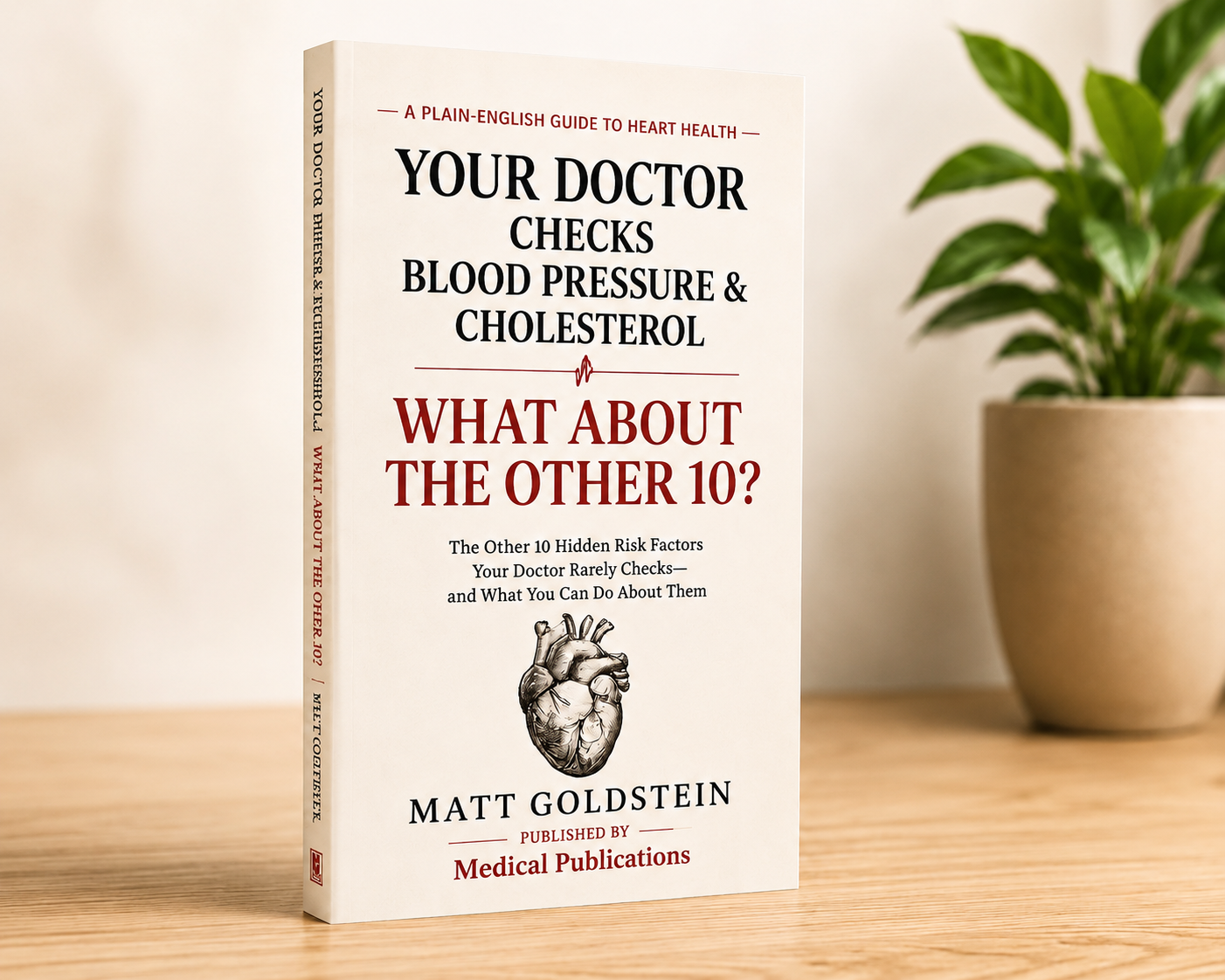
Get Your Free Heart Book
Your Doctor Checks Blood Pressure & Cholesterol: What About the Other 10?
Most heart attacks happen to people whose last checkup came back “fine.” This book covers the 12 risk factors your doctor may not be testing — in plain English, backed by research.
*These statements have not been evaluated by the Food and Drug Administration. This product is not intended to diagnose, treat, cure, or prevent any disease. This article is for educational purposes only and does not constitute medical advice. Always consult your healthcare provider before making changes to your health regimen.
References
- Guerrero-Romero F, et al. “Magnesium in Metabolic Syndrome: A Review Based on Randomized, Double-Blind Clinical Trials.” Nutrients. 2021;13(6):1–15.
- Mozaffarian D, Wu JH. “Omega-3 fatty acids and cardiovascular disease: effects on risk factors, molecular pathways, and clinical events.” J Am Coll Cardiol. 2011;58(20):2047–2067.
- Staerk L, et al. “Atrial Fibrillation: Epidemiology, Pathophysiology, and Clinical Outcomes.” Circ Res. 2017;120(9):1501–1517.
- Voskoboinik A, et al. “Alcohol and Atrial Fibrillation: A Sobering Review.” J Am Coll Cardiol. 2016;68(23):2567–2576.
- Drager LF, et al. “Sleep Apnea and Cardiovascular Disease: Lessons From Recent Trials and Need for Team Science.” Circulation. 2017;136(19):1840–1850.


