
Why Nitric Oxide Production Drops With Age and What That Means for Your Blood Vessels
Why Nitric Oxide Production Drops With Age and What That Means for Your Blood Vessels
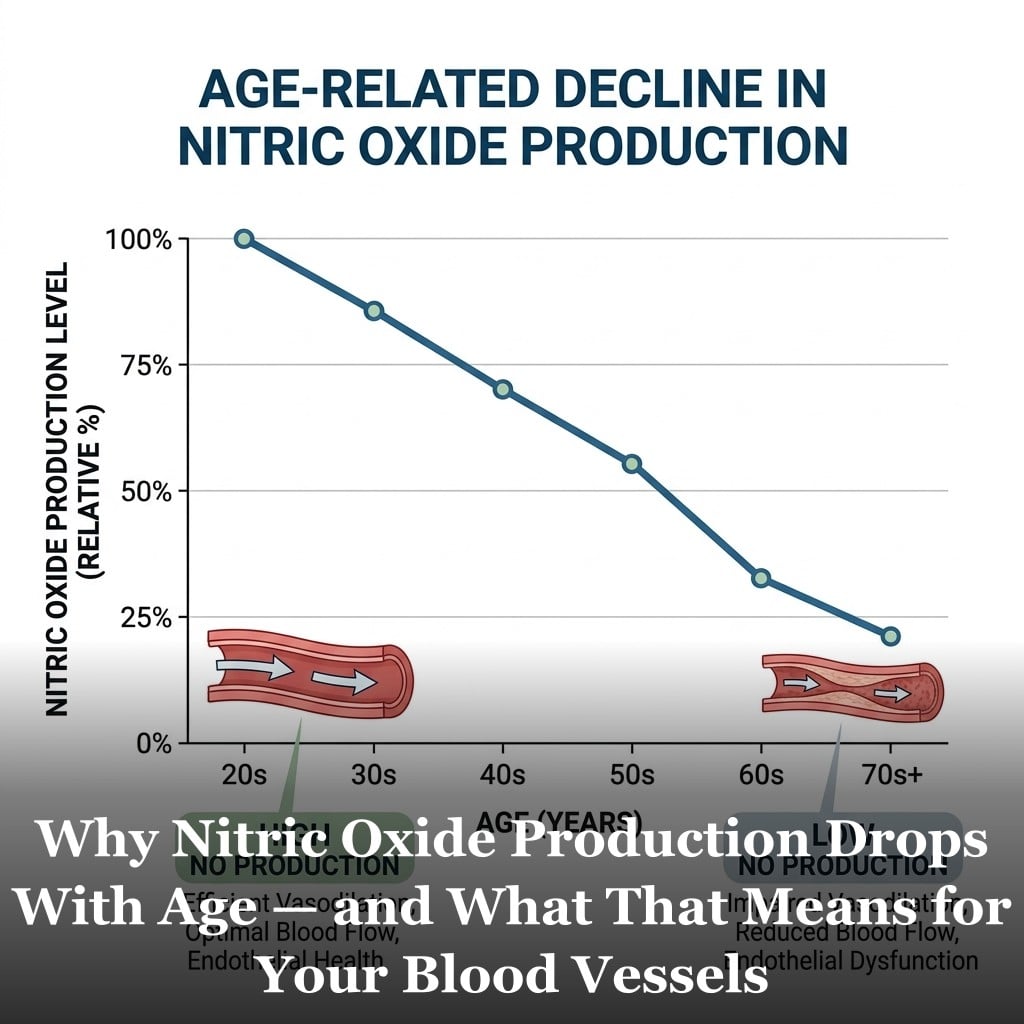
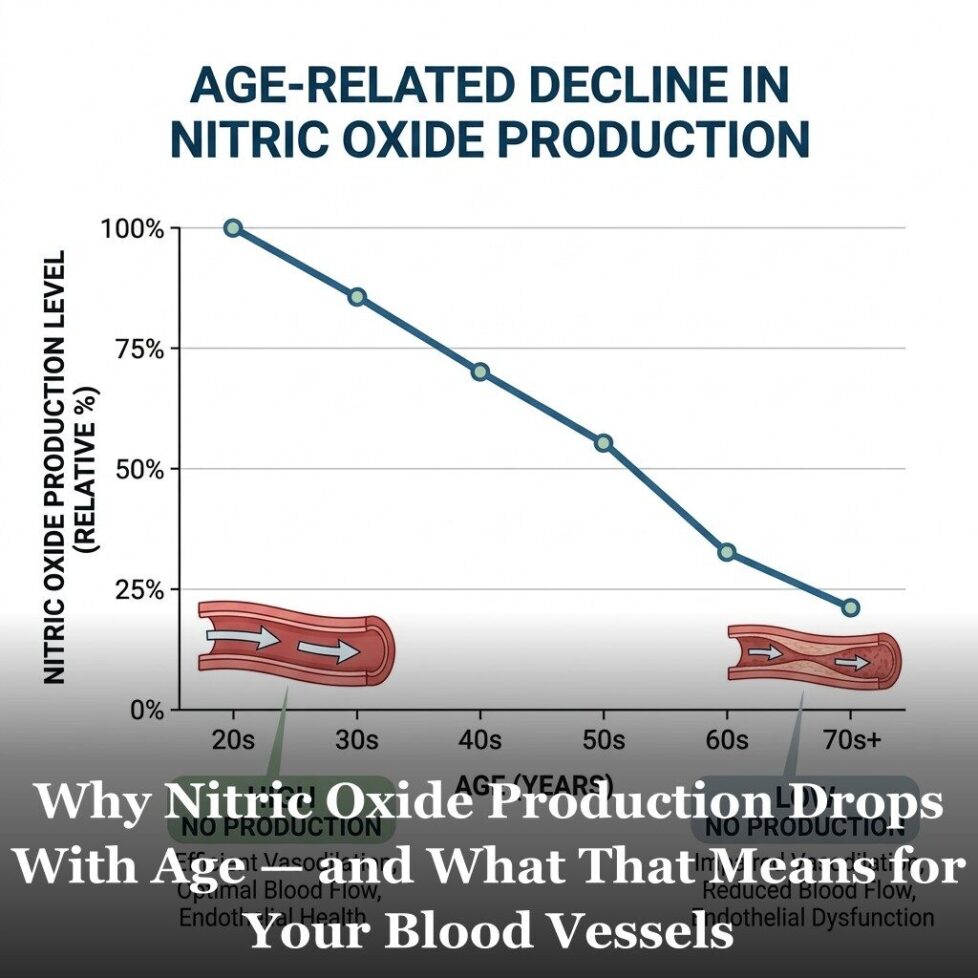
By the time most people reach their 60s, their bodies are producing roughly half as much nitric oxide as they did at 20. This isn’t a disease — it’s a normal part of aging. But it has real consequences for cardiovascular health that most people never hear about from their doctors.
The decline in nitric oxide production is one of the key reasons blood vessels become stiffer with age, blood pressure tends to rise, and cardiovascular risk climbs steadily after 40. Understanding why it happens — and what influences the rate of decline — gives you something actionable to work with.
Why Nitric Oxide Production Declines With Age
Nitric oxide is produced primarily by endothelial cells through an enzyme called eNOS (endothelial nitric oxide synthase). As we age, two things happen that impair this process.
First, endothelial cells themselves become less efficient. Accumulated oxidative stress over decades damages cellular components, including the eNOS enzyme itself. This is sometimes called “eNOS uncoupling” — the enzyme becomes less effective at producing NO and may actually produce harmful free radicals instead.
Second, the substrate available for NO production decreases. eNOS requires L-arginine and a cofactor called BH4 (tetrahydrobiopterin) to function properly. With age, L-arginine availability in endothelial cells tends to decline due to increased activity of an enzyme called arginase, which competes with eNOS for L-arginine. And BH4 is particularly vulnerable to oxidative degradation.
The result is a progressively less functional NO production system in the endothelium — one that makes less NO, less efficiently, from less available substrate.
What Happens When Nitric Oxide Declines
As NO production falls, the cardiovascular system becomes progressively less able to maintain its normal flexible, adaptive state. The effects accumulate over years.
Arteries become stiffer. Without adequate NO signaling, smooth muscle cells in arterial walls remain in a more contracted state. Combined with the structural changes in arterial wall proteins that occur with age, this contributes significantly to the arterial stiffening and rising pulse pressure discussed in the earlier articles in this series.
Blood pressure rises. The vasodilating effect of NO is an important regulator of resting blood pressure. As NO production falls, the counterbalancing vasodilatory tone decreases, and blood pressure tends to drift upward. This is part of why blood pressure rises with age even in people who eat well and exercise regularly.
Endothelial dysfunction develops. Insufficient NO changes the character of the endothelial surface from non-inflammatory and non-sticky to more reactive. White blood cells adhere more readily to vessel walls. The early-stage inflammatory process that underlies plaque development becomes more likely.
Exercise capacity may decrease. Nitric oxide mediates the dilation of blood vessels during exercise to match blood flow to working muscles. With declining NO, this response becomes less robust, contributing to reduced exercise tolerance in older adults.
What Supports Healthy Nitric Oxide Production as You Age
While some decline in NO production is an inevitable part of aging, its rate and magnitude are influenced by factors within your control.
Regular aerobic exercise is the single most well-studied intervention for maintaining NO production with age. Both the acute effects during exercise and the long-term adaptations from consistent training support endothelial NO function. Studies on master athletes (people who have exercised consistently throughout life) show significantly better NO-mediated vasodilation than sedentary peers of the same age.
Dietary nitrates support a separate NO production pathway that doesn’t depend on eNOS. Bacteria in the mouth convert nitrates from vegetables into nitrite, which tissues then convert to NO. This pathway partially compensates for declining eNOS activity. Leafy greens, beets, arugula, and spinach are among the richest dietary nitrate sources.
L-arginine and L-citrulline can support NO production by increasing substrate availability for eNOS. L-citrulline, found in watermelon and available as a supplement, converts to L-arginine in the kidneys and appears to be more effective than L-arginine supplementation directly for sustaining NO levels. We cover these amino acids in depth in the next article in this series.
Reducing oxidative stress protects eNOS function and preserves BH4, the essential cofactor. Antioxidant-rich foods, limiting processed food and excess alcohol, and not smoking all contribute to better preservation of the NO production system.
For the broader context of how NO connects to other cardiovascular risk factors, see the 12 cardiovascular risk factors.
Frequently Asked Questions
At what age does nitric oxide start to decline?
Research suggests NO production begins declining gradually in early adulthood, with more measurable effects becoming apparent in the 40s and 50s. The rate of decline accelerates with age and is significantly influenced by lifestyle factors. People who are sedentary, smokers, have metabolic disease, or have high oxidative stress show steeper declines than those who exercise regularly and maintain metabolic health.
Can you reverse age-related nitric oxide decline?
Fully reversing the structural changes that occur with age isn’t possible. But the functional NO production capacity can be meaningfully supported and improved at any age through exercise, dietary interventions, and addressing factors like oxidative stress. Studies on previously sedentary older adults who begin exercise programs show improvements in endothelial NO function within weeks.
How do I know if my nitric oxide production is low?
There’s no simple consumer test for NO levels. Clinical assessment uses flow-mediated dilation (FMD) ultrasound, which measures how well an artery dilates in response to increased blood flow — a NO-dependent process. This is available through cardiology practices. Indirect signs of reduced NO include arterial stiffness, elevated blood pressure in the absence of other causes, and reduced exercise tolerance. Routine blood panels don’t measure NO directly.
Does smoking affect nitric oxide?
Significantly. Cigarette smoke contains compounds that react with and destroy nitric oxide, and chemicals in smoke increase oxidative stress that damages eNOS. Smokers consistently show significantly worse endothelial NO function than non-smokers. Some research suggests this effect begins with occasional smoking. Smoking cessation is associated with gradual improvement in endothelial function over months and years.
Get Your Free Heart Book
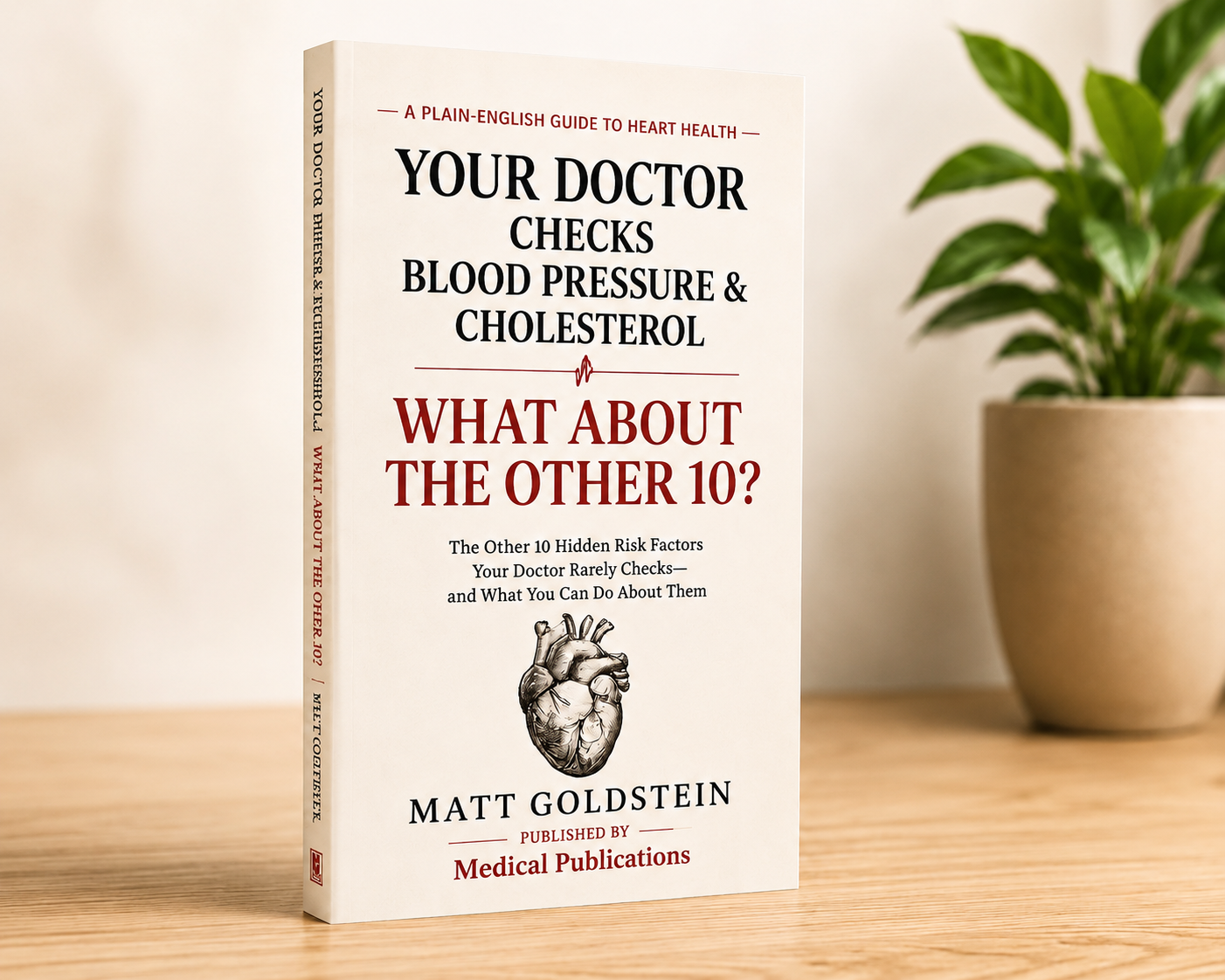
Your Doctor Checks Blood Pressure & Cholesterol: What About the Other 10?
Most heart attacks happen to people whose last checkup came back “fine.” This book covers the 12 risk factors your doctor may not be testing — in plain English, backed by research.
Get the Free Book →* These statements have not been evaluated by the Food and Drug Administration. This product is not intended to diagnose, treat, cure, or prevent any disease.


